Considering cheek filler in houston? Start with a consultation.
Book Consultation(opens in a new tab)What it treats
- Flattened or deflated mid-face and cheekbones
- Loss of cheek projection from age-related fat-pad descent
- Mild sagging that starts in the lower face but originates higher up
- Asymmetry between the two sides of the mid-face
- A tired or sunken look across the upper cheek
- Lack of structural support above the smile lines and jowls
Products used in this treatment: Restylane Lyft, Restylane Contour, Evolysse Form
Why cheeks deflate in the first place
Two things happen, and they happen together. The fat pads that give a young cheek its rounded fullness do not just shrink - they slide down and forward over time. So volume that used to sit high on the cheekbone migrates toward the smile line and the jaw. At the same time, the underlying bone changes. The maxilla and the orbital rim quietly remodel and recede with age, which removes the scaffolding the soft tissue was draped over.
That bone loss is the part patients are most surprised by. We tend to think of facial aging as a skin problem, but a lot of it is the frame underneath moving. When I restore cheek projection, I am partly standing in for the support those structures used to provide.
One clinical aside here. Because the deflation starts high and the consequences show up lower, treating only the lower face - filling a deep smile line directly, for instance - often misses the cause. Lift the cheek and that smile line frequently softens on its own.
How restoring the cheek lifts the whole face
Skin and soft tissue behave like a fabric pinned at the top. Re-pin the top - the cheekbone - and the drape below tightens. When I add structure to the mid-face, the smile lines flatten a bit, the jowl can look less heavy, and the lower face reads less pulled down. It is not a facelift and I never want it sold as one. But a well-supported cheek changes how the entire lower two-thirds of the face hangs.
This is why I almost always assess the cheek before I touch a lower smile line or a marionette area. Filling from the bottom up tends to add weight in the wrong place. Filling from the top down, where the support actually lives, gives a more honest lift.
Product choice: structure versus a softer integrate
Not every cheek wants the same filler, and matching the product to the tissue is most of the job.
Restylane Lyft is my go-to when the goal is structural lift and projection. It is firm enough to hold shape against the tension of the surrounding tissue, and it is FDA-approved for cheek augmentation and the correction of mid-face contour deficiencies. When a cheekbone has genuinely flattened, Lyft gives me a defined point to build from.
Restylane Contour is another structured option I reach for on the cheekbone when I want projection that still moves somewhat naturally with expression. It is built to flex a little more than Lyft while still providing lift.
Evolysse Form is the choice when I want the result to integrate softly and blend into the tissue rather than sit as a distinct point of structure. Evolysse is manufactured with a cold-process technology meant to preserve longer hyaluronic acid chains, and Form is the firmer member of that line intended for deeper placement. I use it in patients who want fullness restored without a sculpted, high-cheekbone look.
Plenty of patients end up with a layered plan - a structured product to set the projection and a softer one to feather the transition. What I use on you depends entirely on your anatomy, and I will talk you through the trade-offs at the consult.
The consult, and why I under-fill on purpose
Cheeks are the area where over-treatment shows the most. The look people are describing when they say "pillow face" usually starts in an over-filled mid-face, where the cheek balloons up under the eye and the face loses its natural planes. That outcome is avoidable, and avoiding it is mostly about restraint and follow-up rather than skill on any single injection.
So my rule for myself is simple. Under-fill, then add. I would rather you come back at two weeks and tell me you want a touch more than have you walk out with too much and need it dissolved. The cheek also holds and spreads product more than people expect, so a conservative amount often does more than it looks like it should.
At the consult I assess your bone structure, where your fat pads have settled, and your asymmetry, and I map out which product goes where. That is also where I give you honest pricing, which I price per syringe. Cheeks frequently need more than one syringe to make a real difference, and I will tell you that up front rather than have you find out halfway through.
The appointment, onset, longevity, and downtime
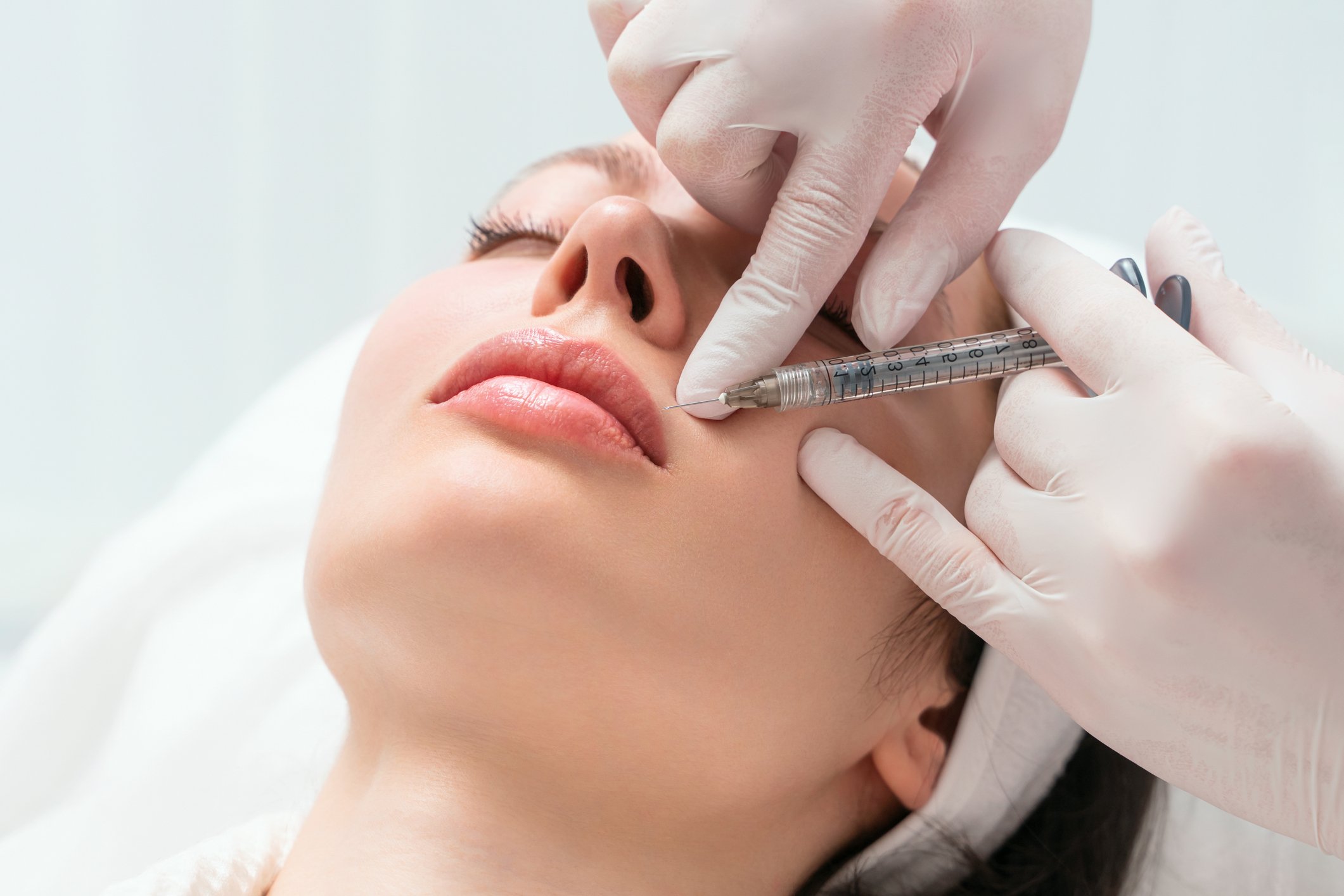
A cheek appointment usually runs 30 to 45 minutes. I use topical numbing, and these HA products contain lidocaine, so the injections themselves are tolerable for most people - pressure with a few brief sharper moments. I often use a cannula in the cheek rather than a needle for some placements, which can mean less bruising.
The lift is immediate. You will see projection restored the day of, though some of what you see at first is swelling, so the final shape settles over a couple of weeks. Bruising and swelling are normal for roughly 3 to 7 days. I have most cheek patients back at the two-week mark so we can judge the settled result and add if needed.
For longevity, cheek filler tends to last well because the area moves less than lips. In my practice most patients get somewhere around 12 months or more from a structured cheek treatment, but that varies with the product, how much you metabolize filler, and your own tissue. I will not promise you a number - I will give you a realistic range for your plan.
When I steer you to Sculptra instead, and the safety of HA
Filler is not always the right tool. If what you are dealing with is global facial deflation - a thinning across the whole face rather than a specific cheekbone that needs projection - I may steer you toward Sculptra. Sculptra is a biostimulator that works by prompting your own collagen over a series of sessions, so it restores volume gradually and across a broader area rather than giving the targeted, day-one lift that HA filler does. Different tool, different job. Some patients do well with cheek filler for projection plus Sculptra for the overall canvas.
One genuine safety point in favor of HA cheek filler: it is dissolvable. Restylane Lyft, Restylane Contour, and Evolysse Form are all hyaluronic acid, which means if you do not love the result, or in the rare event of a vascular complication, I can use hyaluronidase to break the product down. That reversibility is a real reason I lean on HA in an area as visible and as front-and-center as the cheek.