
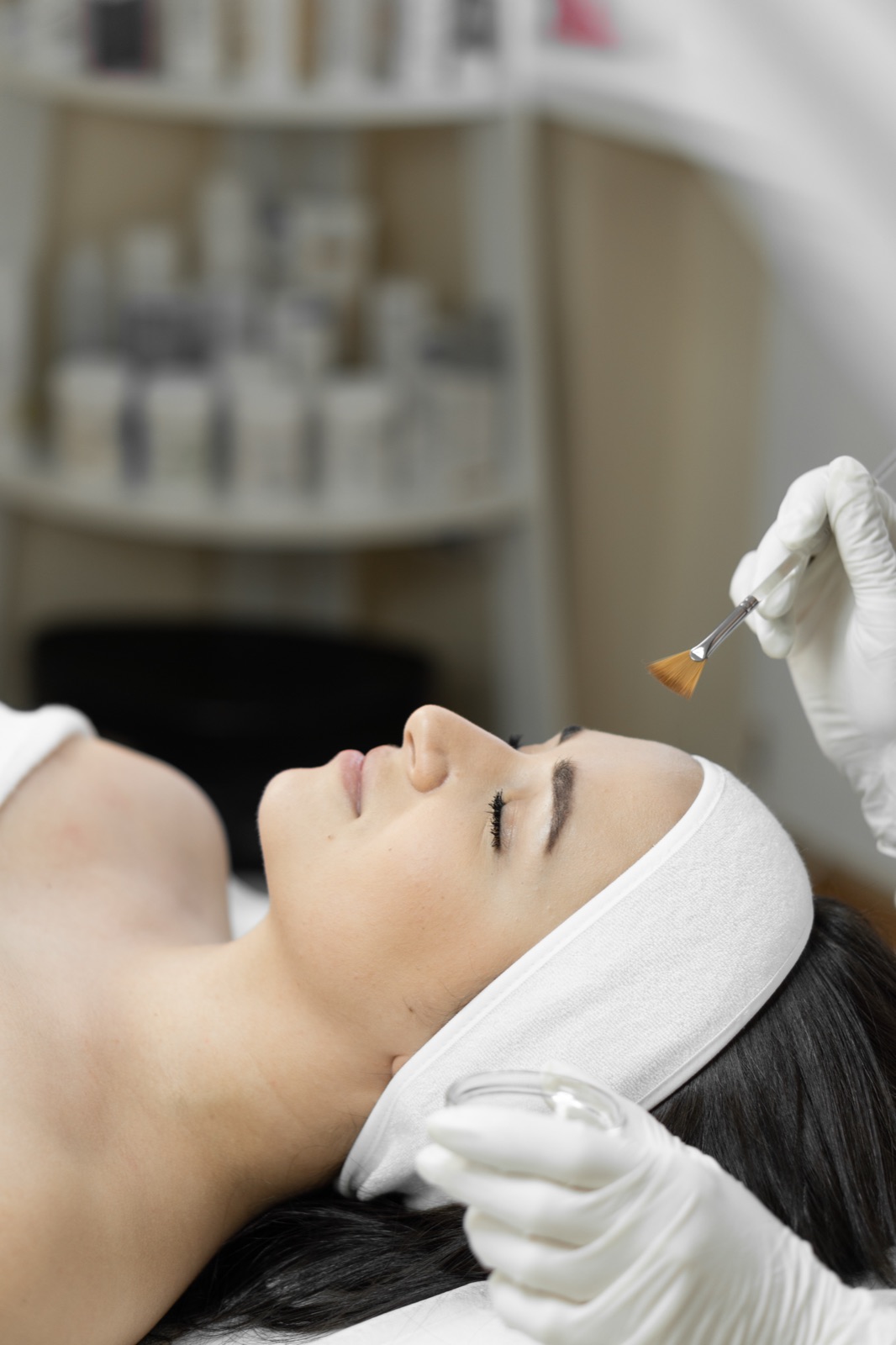
Considering chemical peels in houston? Start with a consultation.
Book Consultation(opens in a new tab)What it treats
- Dull skin texture and tone
- Hyperpigmentation and post-inflammatory pigment
- Mild to moderate acne
- Fine lines and early photoaging
- Uneven absorption of skincare products
- Some types of melasma (with caution)
Products used in this treatment: Glycolic acid peels (light), Lactic acid peels (light, hydrating), Salicylic acid peels (light, acne-prone skin), TCA peels (medium-depth), Jessner peels, Combination protocols matched to skin type
How I think about which peel is right for you
The decision starts with your Fitzpatrick skin type. Patients with deeper pigment (Fitzpatrick IV through VI) need careful peel selection because aggressive peels can cause post-inflammatory hyperpigmentation that takes months to resolve. For these patients I tend to start with lactic acid or low-percentage glycolic.
For patients with photo damage and fine lines (often Fitzpatrick I to III with sun exposure history), TCA at the right concentration delivers real improvement in tone and texture in 2 to 3 sessions.
For acne-prone skin, salicylic acid penetrates the lipid layer of the follicle and works on active breakouts directly. I usually run a series of monthly salicylic peels alongside topical treatment.
For melasma, I am more conservative - melasma can be aggravated by heat and inflammation, and a peel that is too aggressive can make it worse rather than better. We pick the peel carefully and combine with strict daily SPF.
Houston-specific peel considerations
Houston summers complicate peel planning. UV exposure after a peel, especially a medium-depth peel, can cause hyperpigmentation in skin that is freshly resurfaced and especially photosensitive. I generally schedule deeper peels in the cooler months (October through March) and use lighter peels in summer with strict SPF compliance.
Humidity also affects how peels behave. The same percentage of glycolic acid behaves differently on skin that has been compromised by months of sweat-and-AC-cycling than on the same skin in winter. We adjust accordingly.
What a peel appointment is like
Plan on 30 to 60 minutes depending on the peel. I cleanse and prep your skin, apply the peel solution in measured layers, neutralize if needed, and apply post-peel care. You will feel tingling, warmth, and at deeper peels brief sharp stinging. Light peels have almost no downtime - you will look flushed for a few hours. Medium peels will have visible flaking from days 3 to 7.
Aftercare that actually matters
- Daily SPF 30 or higher is non-negotiable. This is the difference between a good peel result and a bad one.
- No retinol, glycolic, salicylic, vitamin C, or other actives for 5 to 10 days after a peel.
- No sweat-heavy workouts for 24 to 48 hours after a peel (matters in Houston summers especially).
- Do not pick at any flaking. Let the skin shed naturally.
- Gentle cleansers and bland moisturizers for the post-peel week.
When I steer patients away
- Active herpes simplex outbreak in the treatment area.
- Recent isotretinoin (Accutane) use within the past 6 months.
- Pregnancy or breastfeeding for certain peel agents.
- Active autoimmune skin disease in a flare.
- Patients with very dark Fitzpatrick scoring who want aggressive peels - we go lighter and slower to avoid pigmentation issues.